During
the trip we have learned a lot of knowledge and got many experiences. This task
not only made us to accomplish it but it made us realized how important to get
know the history of that place and the story behind all the building that stay
in Malacca. It is a good thing because the government decided to keep those
buildings for everyone especially youth’s watch. For the example, Memorial
Pengisytiharan Kemerdekaan or in English, Memorial Declaration of Independence
at first was a building for British, Malacca Club. Besides that, we also amazed
with all the signs and notes at each places which really help us to understand
and the information there guided us
Wednesday, 8 March 2017

BECA/RICKSHAW
The
best way to celebrate and appreciate the panoramic city of Malacca to walk
slowly while sitting rest rickshaw ride. The rickshaw will take you through the
streets and alleys in the center of this historic city, which often will be
missed if you decide to walk alone. This spot can be rented by the hour or by
the distance of the journey and it is based in Stadthuys. The rickshaw are
beautifully decorated with amazing and unique design and the cost of the ride is
RM 30 per hour for each rickshaw can be sit by 2 average weight adult with
probably a child. And there is a clear signboard located near Jonker street
entrance and the clock tower that states clearly the rental rates.This
rickshaws are quite happening, some are fully equipped with sound systems and
PA speakers so as the rider takes the customers around, you can hear music
coming out from the rickshaw. There was a Malay family and one rickshaw played
Malay songs or the others song when they ride it. The tourists also can have so
much fun and great experience by riding the rickshaw that take through the
streets of historic city.

Melaka Stamp Museum

This building was the former Melaka
State Museum, also known as the ‘Sekolah Gambar’. It was originally used as the
residence for Dutch dignitaries living in Melaka.
The building has the shape and
characteristics of western architecture with local roof, doors and windows. It
was constructed using local materials. This museum opens every day from 9.00
a.m. to 5.00 p.m. The ticket price for adult citizen and adult foreigner is RM
3.00. The price ticket for children citizen and children rofeigner is RM 2.00.
The Museum building was originally used
as the residence for Dutch dignitaries living in Malacca until the end of World
War II after which the building into the Malacca State Museum.
On 19th March 1954, G.E.Wisdom the Resident Commissioner of Melaka converted
this building to a museum. However, in 1982, the museum was moved to the
Stadhuys. Now it houses Melaka Stamp Museum.
The Malacca Islamic Foundation took over
the building and used it for several years until the Enforcement Unit of the
Malacca Municipal Council took over.
In 2004, the building was restored by
the Department of Museum and Antiquity and handed over to the Malacca State
Government. In 2007, the state government, in cooperation with Pos Malaysia,
decided to set up the Malacca Stamp Museum at the building.
Results Pos Malaysia Cooperation with
Government Melaka, Melaka Then comes the STAMP Museum In 2007, with the tagline
‘’ Keranamu, Dunia Menjadi Indah ‘’.
Stamp not only represent the payment has
been clear for mail delivery, it also represents a country, a nation and a
recording of natural beauty and a reminder of certain milestones.
The Department of Museums and Antiquity
has gazetted it as an ancient monument according to Section 15 of the Antiquities Act 168/1976
RIVER CRUISE MALACCA
The Malacca River is the river that cuts across
Malacca town, on its way to the Straits of Malacca. It separates the civic
district clustered at the foot of St Paul's Hill, from the residential and
commercial district of Heeren Street and Jonker Street. A flotilla of small
boats transports sightseers up and down past historic buildings, old warehouses
(godowns), interesting mangrove stands, churches, and villages. The 1998 Sean
Connery movie Entrapment was partially filmed here. Tours last about 45 minutes
in boats ranging from 20- to 40-seaters, and normally a minimum of eight
passengers is required before departure.

Their
open hours are 9.00am until 12.00am and there is no any holiday.
The
admission fees are for non My card holder; Adult-RM15.00 and Children RM7.00.
While for My card holder; Adult-RM10.00 and Children RM5.00. And for those who
have student will get special price, RM7.50 per person.
JONKER WALK
Jonker
Street isthe centre street of Chinatown and was once renowned for its antique
shops. However over the years it has turned to clothing and crafts outlets as
well as restaurants. The best part of Jonker Street is the night market on
Fridays and Saturdays that sells everything from tasty treats to cheap
keepsakes. The street houses many shops selling antiques, textiles, handicrafts
and souvenirs. On the weekends, starting Friday night at 6pm, the road is
closed off for traffic and turns in a very crowded night market. Nice
experience in night market when we use to gathered with family and friends ,
buying and searching for a unique and amazing things such as crafts, bracelets
and others thing.


DATARAN PAHLAWAN MELAKA MEGAMALL
The biggest lifestyle shopping megamall in Melaka
that houses international fashion brands, international and local F&B favourites,
entertainment centres, movie cinema, karaoke etc. Linked to 2 hotels (Hatten
Hotel and Estadia Hotel), Dataran Pahlawan is located right in the middle of
UNESCO Heritage Sites and alongside the famous A Famosa.

The current tenants, Padini Concept
Store, Mac City, Golden Screen Cinemas, Charles & Keith, Royal Selangor,
Brands Outlet, F.O.S., Urban Food Hall, KFC, Ms READ, Skechers, Uniqlo, Esprit,
MNG, Terranova, Subway, Sakae Sushi, JOM Coffee, BBQ Plaza, Dragon-I, Souper
Taang, Voir Gallery, Adidas, Cotton On, Black Canyon, Guardian, Watson, Wongkok
Char Chan Teng, Aldo, Victoria Secret, SK Jewellery, Guess, G2000, Sub
TAMING SARI TOWER


The tower was opened to the public on 18 April
2008 and officiated by Malacca Chief Minister Mohd Ali Rustam on 17 May 2008.
The height of the tower is 110 meters. The capacity of the carriage is 80
passengers and the ride lasts for 7 minutes. The name is adapted from Sari
Keris, a mythical weapon is said to has possessive power belongs to the local
legendary warrior Hang Tuah. The structure design of the tower follows the
shape of the Keris. Operation hour 10.00am to 11.00pm – Daliy. Admission fee,
Adult Rm23.00 and Child Rm15.00(Below 12 years old). Mykad holder, Adult
Rm17.00 and Child Rm11.00(Below 12 years old).
MEMORIAL PENGISYTIHARAN KEMERDEKAAN


The warmth of the anniversary of national
independence 54th [2011], which will be celebrated on August 31 this
increasingly felt by more and more people show national flag as a sign of their
patriotism to the country. Accordingly, a very suitable place to visit is the
Memorial Pengisytiharan Kemerdekaan, the "hole" that stores a variety
of information about the history of the country's independence. Memorial
Pengisytiharan Kemerdekaan is located in Bandar Hilir, Melaka and close to
historic landmarks such as City and Replication A'Famosa Malacca Sultanate
Palace. Faced with this memorial is Dataran Pahlawan Melaka Megamall. The
establishment of this memorial is to honor and commemorate the service and
sacrifice of the fighters of freedom and independence of the country free from
colonialism interchangeably. The struggle that began as early as 1511 took 446
years and ended with the declaration of independence on August 31, 1957. The
memorial recalls the history of the struggle for independence by displaying a
variety of materials such as documents, pictures, souvenirs, newspaper
articles, official clothing, pens, a dagger, a seal, the ballot box and
audiovisual.
Exhibits on display in certain sectors for visitors
to know and understand the intricacies of the struggle for independence. These
sectors are:
-Sector Introduction to Malay and,
-Sector Challenges of Foreign Power,
-Sector Rise of National Spirit,
-Sector against the Malayan Union,
-Sector United Malays National Organization,
Facing
-Sector Communist Movement,
-Sector towards Independence,
-Sector Independence,
-Sector Monarchy,
-Sector Head of State and Government, and
-Sector Establishment of Malaysia.


We also met
Mr. Rossli Bin Adnan, professional procurement officer and research unit, who
was willing to help us to get know more about Malacca. He told us from the
history of Malacca until it develop. He also told us that this building for the
first known as ‘Malacca Club’ which was built around 1911 and architecturally
show features a mix of local and British. The building was chosen because it is
in front of Padang Bandar Hilir which is where the late Tunku Abdul Rahman
declared the independence of the country on his return from London Merdeka
delegation. Events that occur on February 20, 1956 was an important episode in
the history of the struggle for independence. The opening of the memorial was
done Tunku Abdul Rahman on August 31, 1985.


Mr. Rossli also gave us a notebook for each one of
us as a souvenir. This is the most memorial experience.
The time visit at Memorial Pengisytiharan
Kemerdekaan is, Tuesday-Thursday; 9.00AM-6.00PM,
Friday;9.00AM-12.00PM/3.00PM-6.00PM and Saturday-Sunday;9.00AM-6.00PM. They
close every Monday. The fees to get in is just free.
TAMAN LARANGAN
The
Palace of the Malay Sultanate of Melaka was constructed together with botanical
garden known as the Forbidden Garden. This Forbidden Garden has the same
concept of the play area for royal princesses during the era of the Melaka
Sultanate. Although, it has never been clearly recorded that the garden
actually existed at the palace, by comparison with other state palaces of the
Malay world, it can be visualized that such a garden did exist in Melaka too.
As was related by a Chinese traveler, there were various types of trees that
grow grew luxuriantly. In the said garden various types of vegetation are
grown, including flowering plants, such as jasmine, frangipani, ‘kenanga’
(fragrant greenish yellow flower), as well as herbal plants such as lemon
grass, ‘Tongkat Ali’ and others.


MUZIUM ISTANA KESULTANAN MELAKA


The
Malacca Sultanate Palace Museum (Malay: Muzium Istana Kesultanan Melaka) is a
museum located in Malacca City, Malacca, Malaysia. The building is a modern
reconstruction of the palace of the Malacca Sultanate. It showcases the history
of the region.The museum building was constructed in 1984 and became a cultural
museum. The museum was officially opened on 17 July 1986 by Prime Minister
Mahathir Mohamad. One important area is a tourist attraction in Melaka City is
the Mount St. Paul who was once the center of the Empire of the Malacca
Sultanate. On the Mount St. Paul is or was formerly known as Melaka trusted
hill lies a beautiful castle probably belonged to Sultan Mansor Shah as
illustrated in Malay History essay Tun Sri Lanang. To maintain awareness of the
effects of history, a replica of the Malacca Sultanate Palace had been
established with the aim to build the spirit and the glory of the golden age of
the Malacca Empire.Replica of the Malacca Sultanate Palace This highlights the
subtlety of art carved floral patterns and local plant as seen on the walls and
pillars carved palace. Aside from being a replica of the palace, the building
also serves as a cultural museum first of its kind in Malaysia.According to the
Malay Annals, this palace has 17 spaces long, and each measuring 87.5 meters
and has 40 doors. However, this scaled down replica of the castle to be 67.2
meters long, 18.5 meters high and 12 meters wide.
Showrooms
including the Throne Room, which depicts the reign of the Sultanate of Malacca
as a ceremonial audience with King and other court regulations in place on the
first floor. Also located on the second floor exhibition contest where the king
and the rooms, while the third floor houses du luggage all the treasury.
Replication
construction objectives Melaka Sultanate Palace.
·
To demonstrate to the
general atmosphere at the Malacca Sultanate Palace and certain rooms such as
the Throne Room, Beradu hall and characteristics of Customs rulers in the days
of the Malacca Sultanate.
·
To show the greatness
of the monarchy as the cultural heritage of the Malay race ever to Malacca was
once well recalls the history of the battle between Hang Tuah and Hang Jebat
and lessons from these events.
·
Replica of the castle
was built in 1984 and used as the Cultural Museum was inaugurated by the Prime
Minister of Malaysia on 17 July 1986. The entire building is made of hardwood,
while the roof of the pieces of wood purchases. The construction is
characterized by craftsmanship of Malacca where the joints of the building is
reinforced by pegs only.
Overall,
this museum shows the function and role of the palace when it displays the
Throne Room, the Royal Beradu room and halls which symbolizes the civilization
of the Malay community.
Construction
of the replica of the Malacca Sultanate Palace has been added to the building
history of the country and demonstrate to the public a center of the largest
empire in Southeast Asia in the 15th century appeared in Melaka.
Malacca
Sultanate Palace Museum is open daily from 9.00 am - 5.30 pm. The entrance fee
is $ 3.00 for adult citizens, foreign citizens RM5.00 for adults and RM2.00 for
children are also citizens and non-citizens.


A Famosa


Kota A Famosa: "The Famous" in
Portuguese. It’s was a Portuguese fortress located in Jalan Parameswara, Bandar
Hilir, 78000 Alor Gajah, Melaka, Malaysia. It is among the oldest surviving
European architectural remains in south east Asia. The Porta de Santiago, a
small gate house, is the only part of the fortress which still remains today.
In
1511, a Portuguese fleet arrived under the command of Afonso de Albuquerque.
His forces attacked and defeated the armies of Malacca Sultanate. Moving
quickly to consolidate his gains, Albuquerque had the fortress built around a
natural hill near the sea. Albuquerque believed that Malacca would become an
important port linking Portugal to the Spice Route in China. At this time other
Portuguese were establishing outposts in such pleaces as Macau, China and Goa,
India to create a string of friendly ports for ships heading to Ming China and
returning home to Portugal.
The
fortress once consisted of long ramparts and four major towers. One was a four
story keep, While the other held an ammunition storage room, the residence of
the captain and an officers’ quarters. Most of the village clustered in town
houses inside the fortress walls. As Malacca’s population expanded it outgrew
the original fort and extensions were added around 1586.
The
fort changed hands in 1641 when the Dutch drove the Portuguese out of Malacca.
The Dutch renovated the gate in 1670, which explains the logo “ANNO 1670”
inscribed on the gate’s arch. About the arch is a bas-relief logo of the Dutch
East India Company.
The
fortress change hands again in the late 18th century when the Dutch
handed it over to the British to prevent it from falling into the hands of
Napoleon’s expansionist France. The English were wary of maintaining the
fortification and ordered its destruction in 1806. The fort was almost totally
demolished but for the timely intervention of Sir Stamford Raffles, the founder
of modern Singapore, who was sent on sick leave from Penang to Malacca in 1807.
Because of his passion for history, this small gate was spared from
destruction.
In
late November 2006, a structure part of the fort, believed to be the Bastion
Middleburg was accidentally uncovered during the construction of 110 meter revolving
tower in Malacca Town. The construction of the tower was ceased and its site
was subsequently shifted to the popular district of Bandar Hilir on Jalan
Merdeka where it was officially opened to the public on 18 April 2008. Malacca
Corporation suspects the structure was built by the Dutch during the Dutch
occupation of Malacca from 1641 to 1824. Earlier in June 2003, a watchtower
named Santiago Bastion was discovered during the construction of Dataran
Pahlawan.
TAMAN BUNGA MERDEKA


If there is one criticism of Melaka, it’s that it s a bit lacking in parks and
open green spaces. One park that does exist in the city centre is along Jalan
Kota, facing the People’s Museum and the strip of other museums in that street.
It is known as Taman Bunga Merdeka but still remembered as Coronation Park, a
name given to commemorate the accession of Queen Elizabeth II to the throne in
June 1953.

At
that time the park was facing the sea and was considerably bigger but
successive land reclamations have pushed the sea back a considerable distance
and city development has nibbled away at the edges of the park.
As
well as providing much needed green space for tourists and the residents of
Malacca, it also serves as an outdoor museum by displaying various
transportation related exhibits indeed the park is sometimes referred to as the
Malacca Transportation Museum.
Here are some of things you can find in this park :


1) Malacca
Memorial Obelisk
It
is a Malacca Memorial Obelisk with inscription on four sides commemorating
those who died for the British side in the sungai Ujong war of 1875 to 1876. It
is perhaps surprising the memorial still stands given that the war was fought
against Malay chief’s rebelling against British colonial taxes.

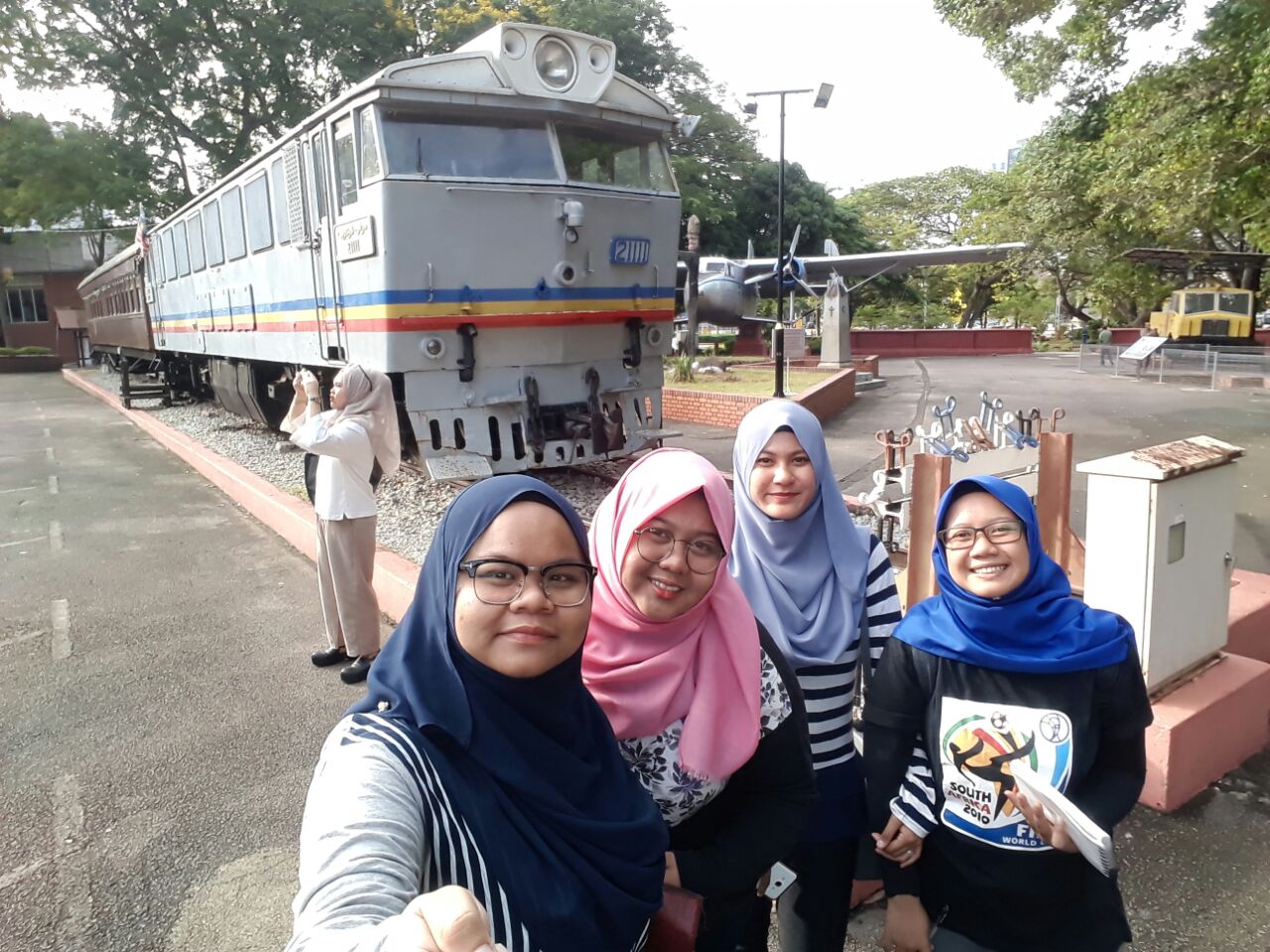
1) Diesel
Locomotive Railway
A
decommissioned Diesel Locomotive named Sungai Lukut 2111 (built in Japan in
1965) together with an attached vintage railway carriage which is now used as a
souvenir shop. A vintage yellow fire engine.


1) St.
Francis Xavier and Bastion Mauritius
This stone is known as “The City Cross”.
It was originally located in the sea but as since been moved in land want
reclamation work was done by the British circa 1937-1939. During the Portuguese
reign in Malacca, The Bacarro records depicted that this stone had once been
adorned by a steer crucifix. The stone is believed to be the location where St.
Francis Xavier first set foot in Malacca during is visit in 1512. It is also
believed that the stone will not sink. This is due the curse that St. Francis
Xavier had put on it. There is an excavated area revealing foundation stones,
all that remains of a bastion in the city walls of Malacca which were built by
the Portuguese and Dutch and demolished by the British.
Trip To Malacca 23 February 2017
INTRODUCTION
Malacca/Melaka is a historical city, a state in
Malaysia and located in the southern region of the Malay Peninsula, next to the
Straits of Malacca.It has numerous historical places and buildings. In order to
preserve those sites, numerous museums have been built to preserve those
legacies. Most of the museums in the state are managed by Malacca Museum
Corporation. It is a city that full of historical and uniqueness which is many
foreigners choose to visit Malacca in their bucket lists.
We, team SPAIN decided to join the trip with our
class members to visit Malacca in 23 February of 2017 until 25 February of
2017, which is 3 days and 2 nights. This trip is consists with accommodation
and transportation which we just paid for the accommodation, RM45.00 per person
and the transportation is sponsored by our college, Kolej Yayasan Pahang. The
breakfast, lunch and dinner are on our own. This trip are lead by our
classmate, Nur Syafika and guided by our lecturer, Sir Azam. The amount of all
the participants including the driver, the lecturer and a junior are 23 people.
At first, most of us were kind of clueless as this is our first time visited
Malacca as class trip but in the end we can develop with the situation.
In first day, half of gathered at Tanjung Lumpur
Hostel while the other at City Times Hostel. The reason why we separated is
because there are some of us stay outside (not a hostel student). In the
beginning, we planned to depart from the hostels in the morning but as the
other students need the bus for morning class then we change the plan to
afternoon. At 3.30 pm, we departure from the both hostels to Malacca. During
the journey, we stopped for eating and washroom and then we continued without
stop to Malacca. We arrived Malacca around 9.00pm and we stopped at Faiz’s, our
classmate restaurant for dinner. We were so grateful and lucky as Faiz’s mother
treat us delicious dinner. Around 11.00pm we arrived at our accommodation,
Asrama Indah Kembara.
The next day, we gathered at 8.00am in front of our
accommodation. Sir Azam gave us a brief for our tasks that day. After that we
ride the bus and went to Bandar Hilir. Before we started our task, we decided
to breakfast first. Around 9.00 am we started our tasks. At night, we went to
river cruise and jonker walk. The last day, there’s nothing much we did. We
went to Bandar Hilir again and bought souvenir.
ATTRACTION
There
are a few of attraction we have visited during the task.
1. Taman
Bunga Merdeka
2. A Famosa
3. Istana Kesultanan Melaka
4. Memorial Pengisytiharan Kemerdekaan
5. Menara Taming Sari
6. Dataran Pahlawan
7. Jonker Walk
8. River Cruise
9. Stamp Museum
10. Beca/Trishaw
9
4
THE DIGITAL FIRM : ELECTRONIC BUSINESS AND ELECTRONIC COMMERCE
A.INTERNET TECHNOLOGY AND THE DIGITAL
FIRM
-Information Technology Infrastructure : The internet
provides a universal and easy-to-use set of technologies and technology
standard that can be adopted by all organizations.
-Direct
Communication Between Trading Partner : Disintermediation removes intermediate
layers.
-Round
the Clock Service : Web sites available to consumers 24 hours
-Reduced
Transaction Costs : Costs of searching for buyers, declines
B. The Changing Economics of
Information
= Information Asymmetry :One party in
a transaction has more information than the other. The internet decreases
information asymmetry.
=Increases Richness : The internet
increases the depth, detail and scope of information.
=Increases Reach : The internet
increases the number of people who can be contacted efficiently.
C. INTERNET BUSINESS
MODELS
- Virtual Storefront : Sells goods or
Services online ( Amazon)
-Information Broker : Provides
information on products or services ( Edmunds)
-Transaction Broker : Provides online
transaction facility ( e-trade, Expedia.com)
-Online Marketplace : Provides a
trading platform for individuals and firms (eBay)
·
D. CATEGORIES OF ELECTRONIC COMMERCE
- Business-to-customer (B2C) :
Retailing of products and services directly to individual customers ( walmart)
-Business-to-business (B2B) : Sales
of goods and services to other businesses (Grainger, ariba)
-Consumer-to-consumer (C2C) :
Individuals using the Web for private sales or exchange (eBay)
E. ADVANTAGES OF E-COMMERCE
-Customer- Centered Retailing : Closer and more
personalized relationship with customer is possible
-Web Sites : Provide a corporate – centered portal for the
consumer to quickly find information on products, services, prices, orders.
-Disintermediation : The elimination of organizations or business
process, responsible for certain intermediary steps in a value chain, reducing
costs to the consumer.
F. THE BENEFITS OF DISINTERMEDIATION
TO THE CONSUMER
Manufacture à Distributorà Retailer à Customer ( spend more example, $48)
Manufacturer à Retailer à Customer ( spend lesser than above example, $40 per
product)
Manufacture à Customer (spend lesser for example 420 per product)
G. BENEFITS OF INTRANETS
- Connectivity :
Accessible from most computing platforms
- Can be tied to
internal corporate systems and core transaction databases
-Platforms for interactive
applications
-Scalable to larger or smaller
computing platforms
H. FUNCTIONAL APPLICATIONS OF INTRANETS
Finance
and Accounting
Human
Resources
Sales
and Marketing
Manufacturing
and production
I.MANAGEMENT OPPORTUNITIES
~ New Products and Services
~ New
Distribution Channels
~ New
Avenues for Marketing and Sales
~ New
Business Models
·
Subscribe to:
Comments (Atom)